SENSOR FLAWS:
File One: Analog to Dialog
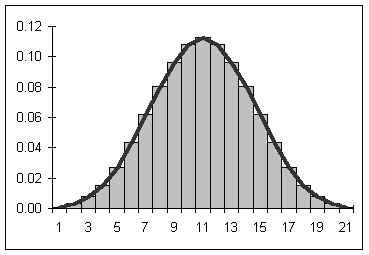
 The first of many different possible problems the numbers you are getting is that a sensor lacks the smoothness that an actual graph would have. See the left. While the beautiful, smooth, continuous, almost-fluid, even, unvarying bell curve you see on the left may be what you want (and yes, it had to have that many adjectives), instead, a sensor will give you only segments of data. As the distance between two reads increase, the accuracy of your readings decrease. Which is bad.
File Two: Noise
 Another annoying part of sensors is NOISE. If you don't know what I'm talking about, here's the short version: think about listening to music. Easy... until someone else nearby turns on their music. In other words, noise is the little things that are happening around the sensor that you aren't interested in. There are many algorithms that can fix this, but none are perfect. The key is knowing the accuracy of the sensor, lest you misread data as something fatally important when, in reality, it is noise.
 File Three: Bias
Finally, the last of the sensor difficulties: bias. This is basically when a sensor has a reading that is constantly off by the same amount. Every. Single. Time. The solution is simple: find the bias at the beginning of the program and get rid of it every single time. Although this may seem like a trivial bug, when combined with the above two, can make reading sensors much more than meets the eye.
File Two: Noise
File Three: BiasFinally, the last of the sensor difficulties: bias. This is basically when a sensor has a reading that is constantly off by the same amount. Every. Single. Time. The solution is simple: find the bias at the beginning of the program and get rid of it every single time. Although this may seem like a trivial bug, when combined with the above two, can make reading sensors much more than meets the eye.

No comments:
Post a Comment